105_stl_algorithms
105 STL Algorithms in Less Than an Hour - Jonathan Boccara
Why STL?
STL algorithm can make code more expressive
- Raising levels of abstraction
- Sometimes, it can be spectacular -> checkout C++ seasoning talk
Avoid common mistakes
- Off-by-one
- Empty loops
- naive complexity
Used by lots of people
- A common vocabulary
- Whatever the version of your compiler
:world_map: Longly islands
std::for_each
Pic
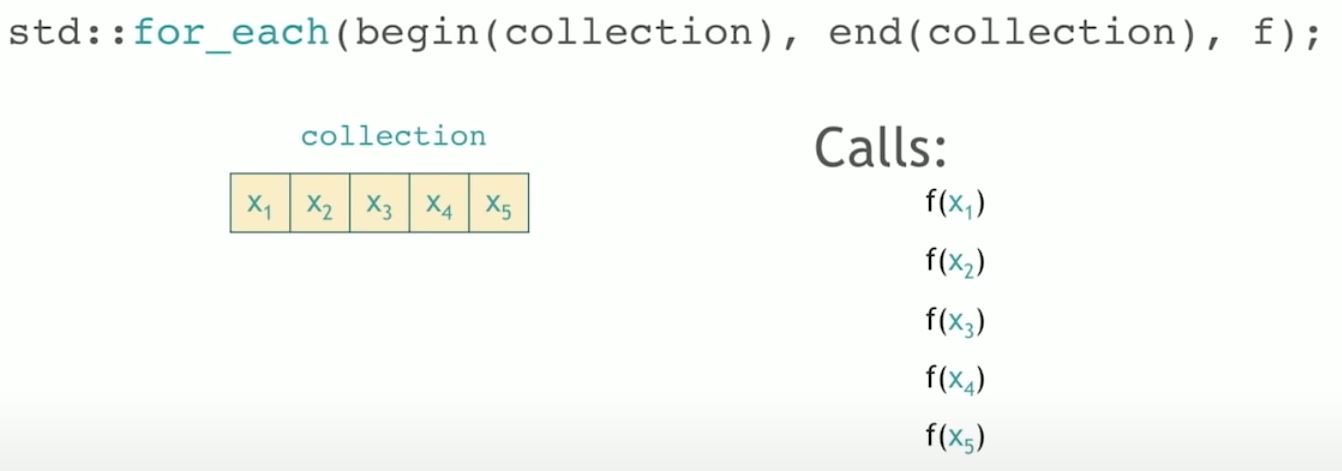
- Note that
std::for_eachdoesn't care the return value off. (Sofcan return void.) - Function returns void oftentimes have SIDE-EFFECTS. Ideally try to use other algorithm without the side-effects in general
std::transform
Pic
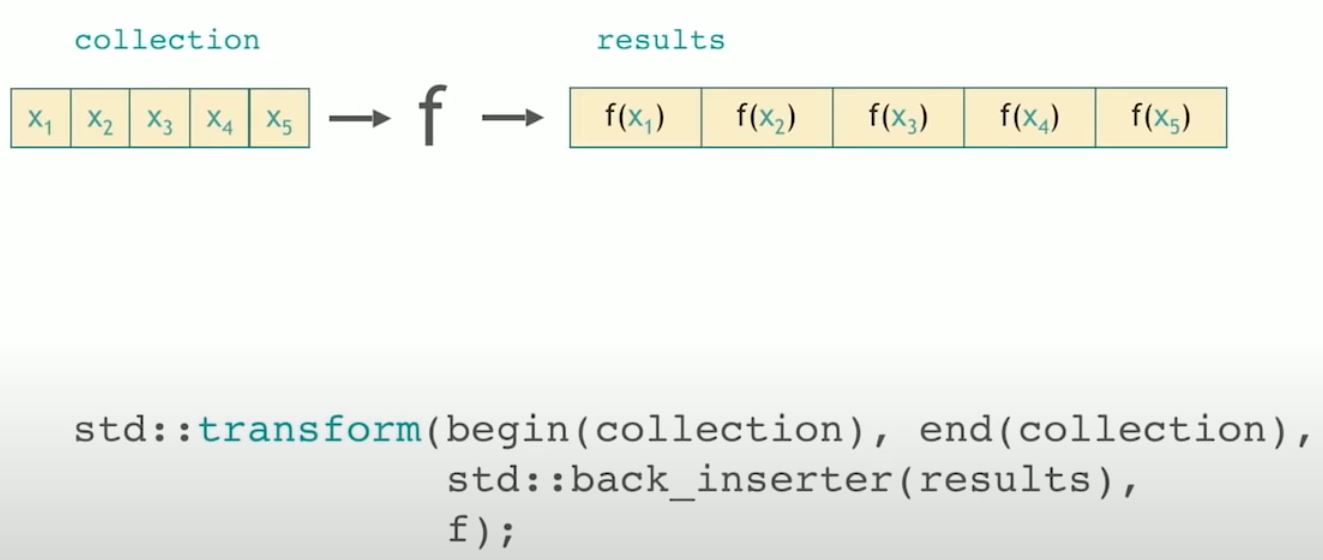
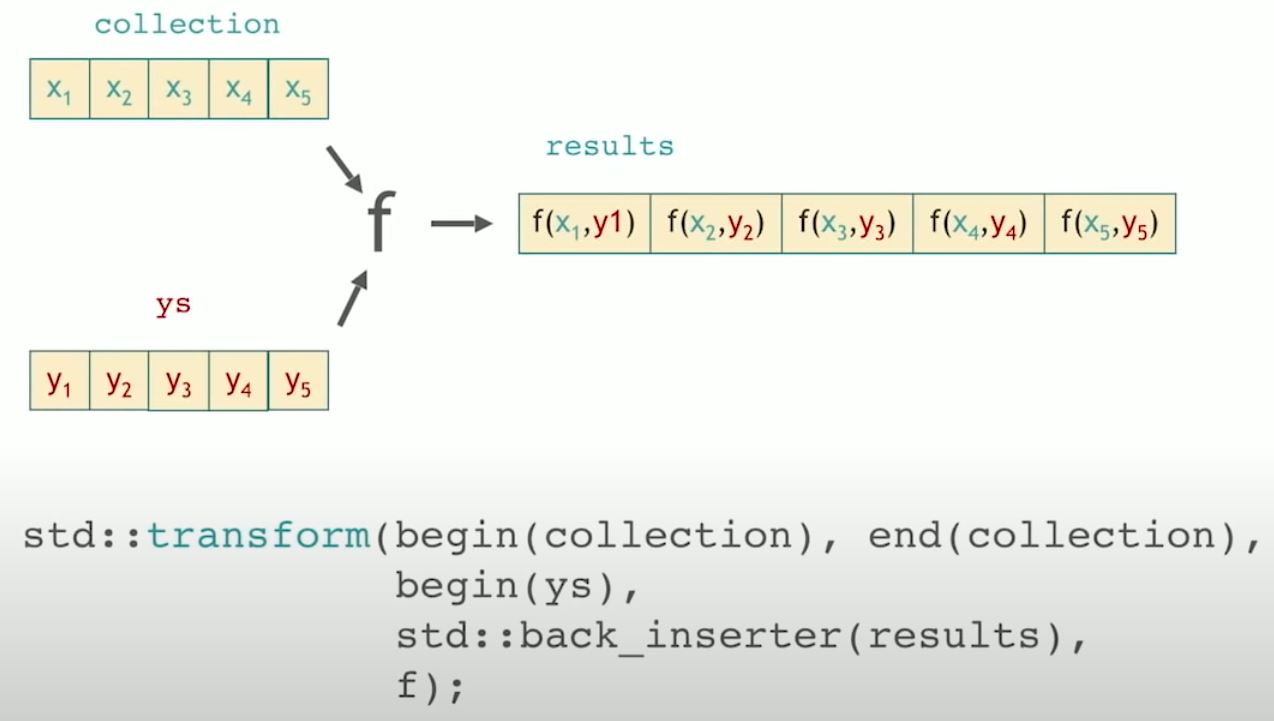
:world_map: Lands of Permutations - elements moving around a collection
:mountain: Heaps
std::make_heap(begin(numbers), end(numbers));
Pic
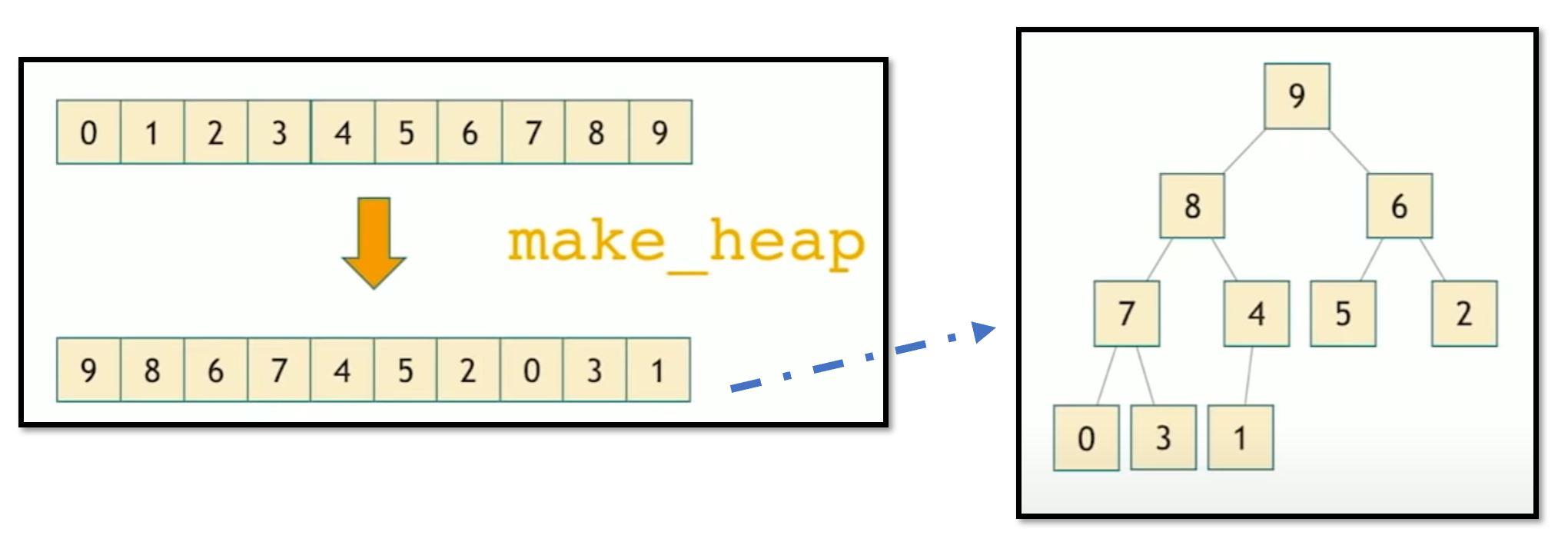
std::push_heap(begin(numbers, end(numbers)));
Pic
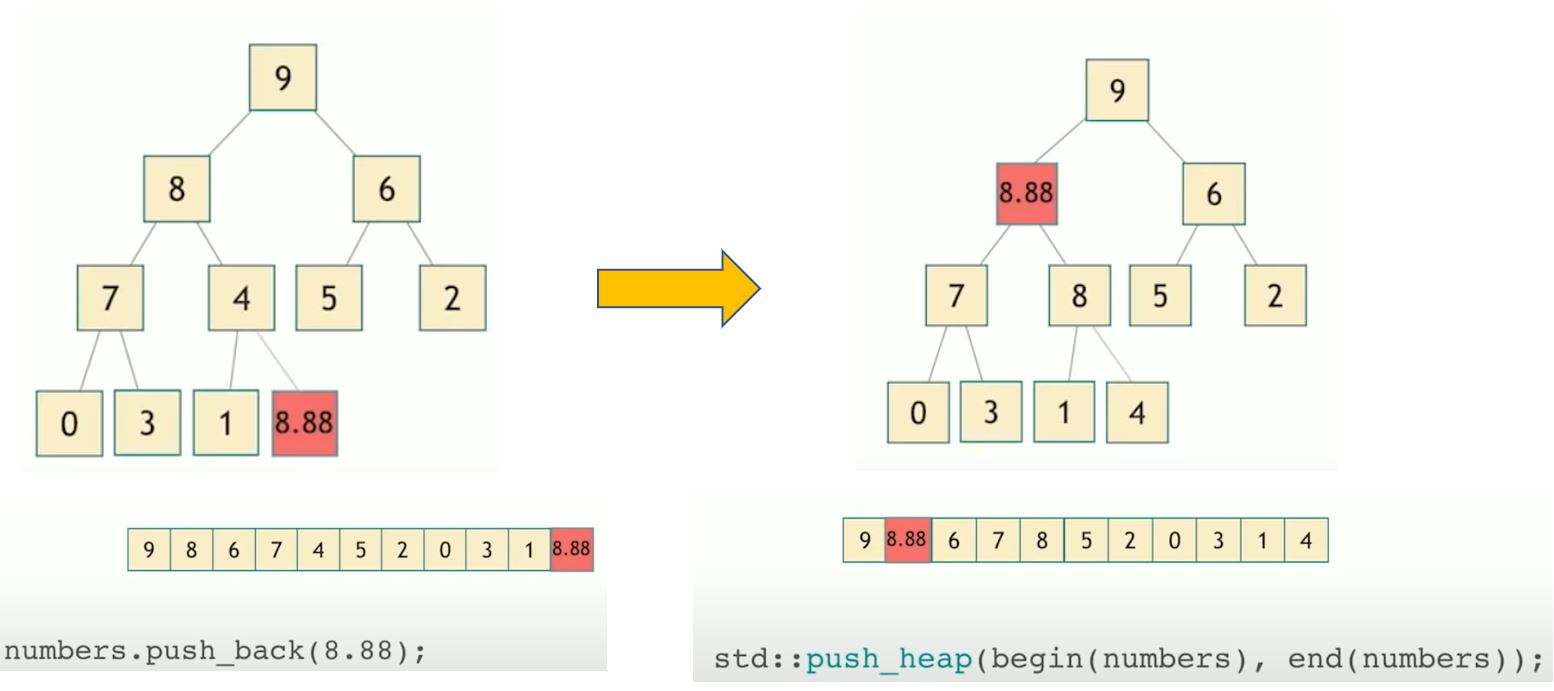
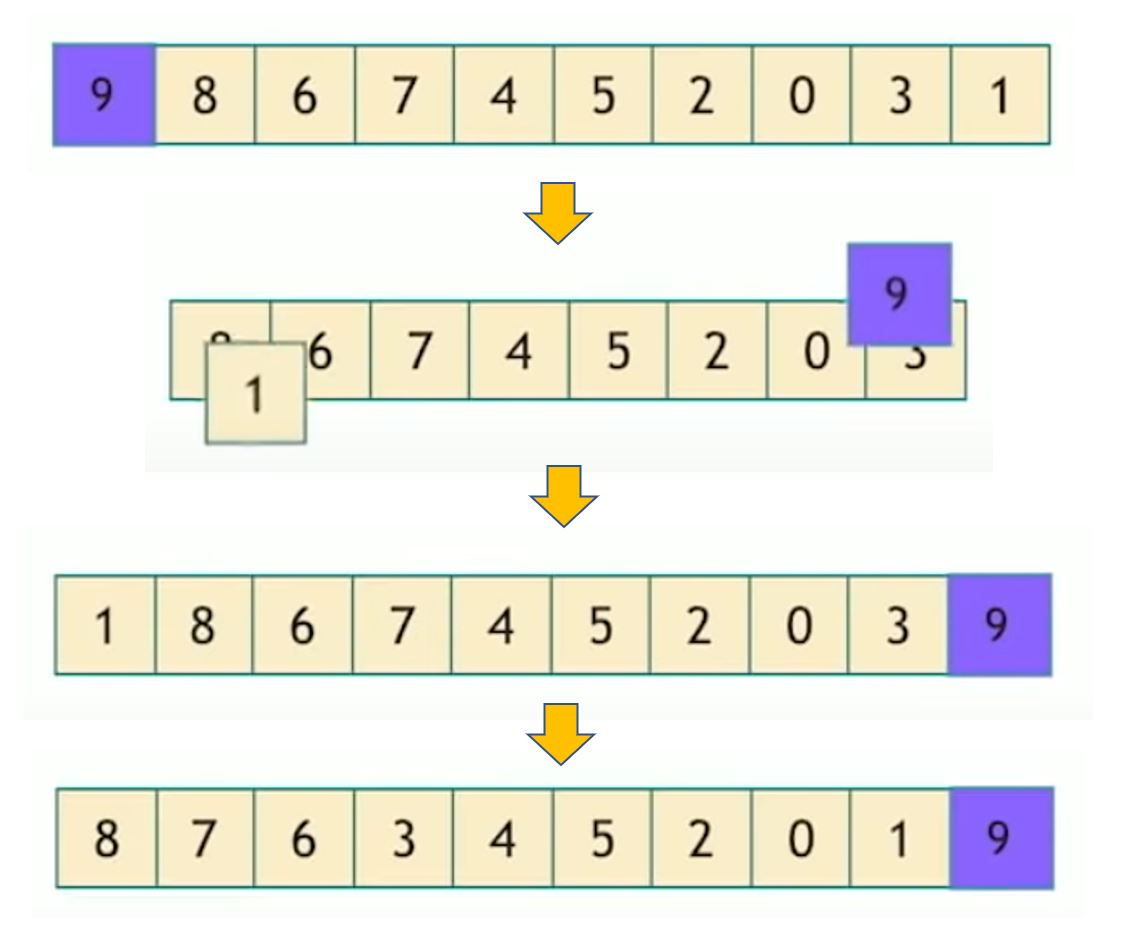
std::pop_heap(begin(numbers, end(numbers)));
- Note: pop_heap didn't pop the (max) element out
- You have to call
numbers.pop_back();to remove it. - And if you call
pop_heap()n times withoutpop_back(), then it becomes sorted array. - (This is what
std::sort_heap()does)
Pic
:mountain: Shore of sorting
std::sort
std::partial_sort: sort the partial range, remaining unordered
std::nth_element: just make sure the nth element will be in the right position if it's in sorted array. For the rest, everything on the left is smaller but not sorted. Everything on the right is larger but not sorted.
std::sort_heap: mentioned already - the n operation of pop_heap()
std::inplace_merge: for 2 sorted part, the merge makes them sorted together.
:mountain: Region of partitioning
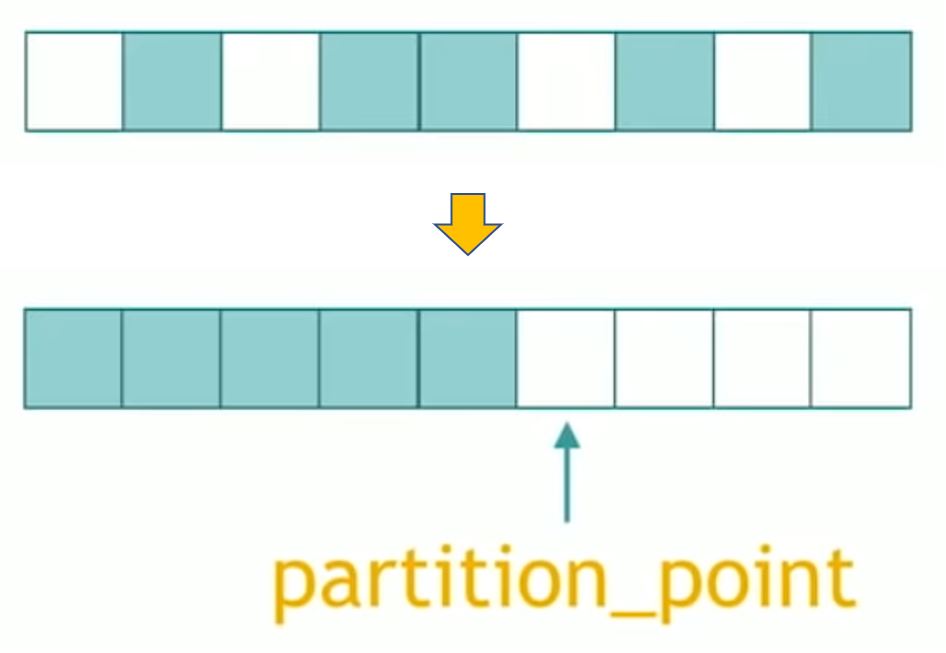
- Partition is look at a collection through a predicate (something returns boolean). Then partition makes all the elements that makes predicate true to the begin of the collection. The boarder for predicate being true/false is called partition point, and it should be at next to the last element that predicate returning true.
std::partition
std::partition_point
Pic
:mountain: Other permutations
std::rotate: move back to front
std::shffle: rearrange elements randomly
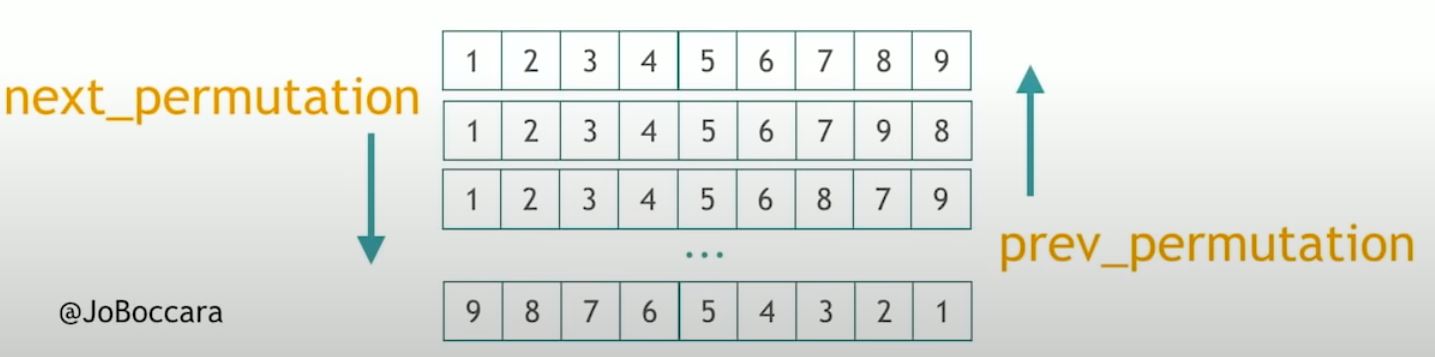
std::next_permutation, std::prev_permutation
Pic
std::reverse
:sparkles: Secret runes for lands of permutation
- Things that you can combine with other algorithm to generate new algorithm
stable_*: keep the same relative order when rearrange
stable_sortstable_partition
is_*: return boolen indicating whether it is *
is_sortedis_partitionedis_heap
is_*_until: return the first iterator that the predicate no longer holds
is_sorted_untilis_partitioned_untilis_heap_until
:world_map: Lands of Queries
:mountain: Querying a value
Pic
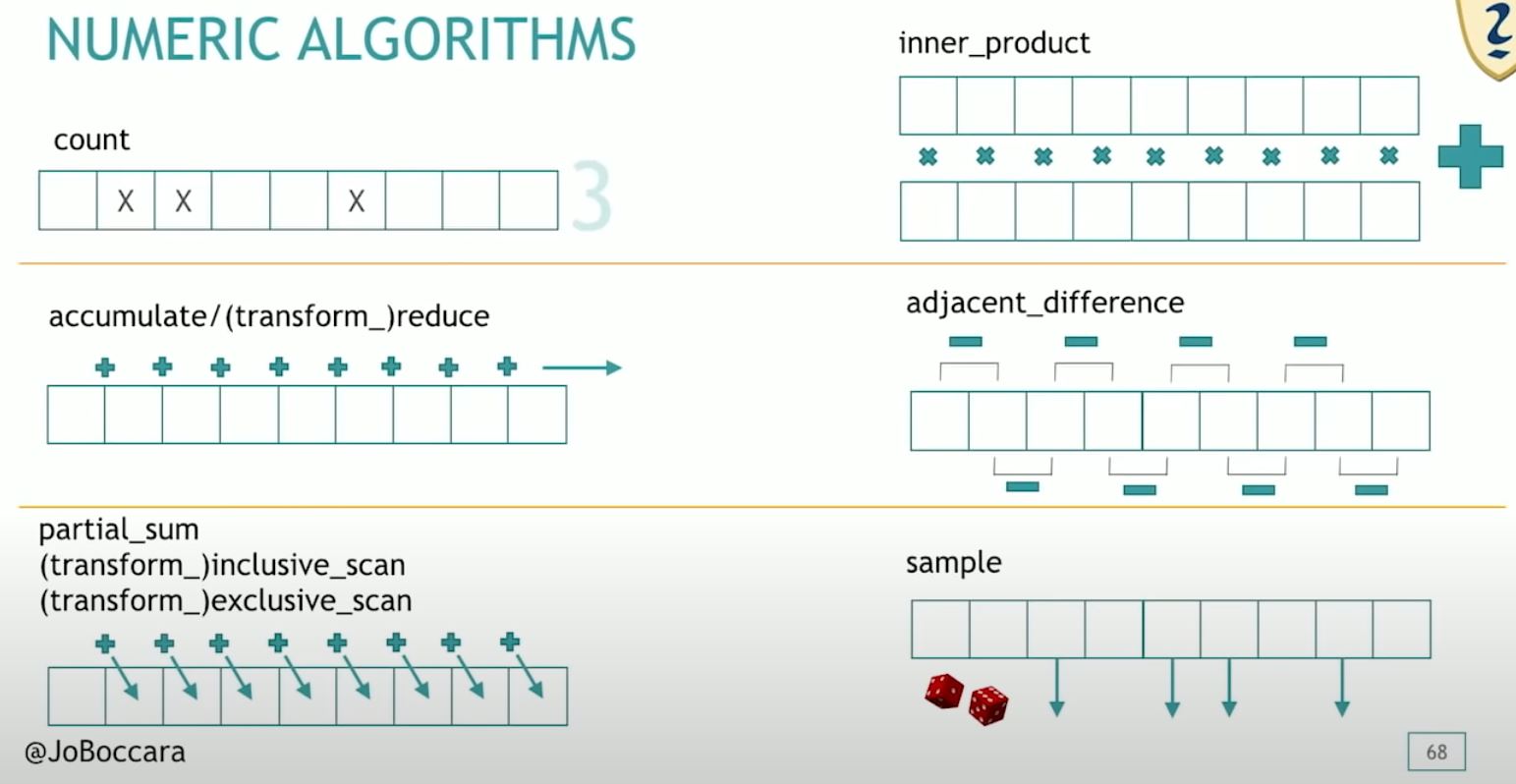
std::count
std::accumulate
std::transform_reduce
std::reduce
std::partial_sum
std::transform_inclusive_scan
std::transform_exclusive_scan
std::inner_product
std::adjacent_difference
std::sample
:mountain: Querying a property
Pic
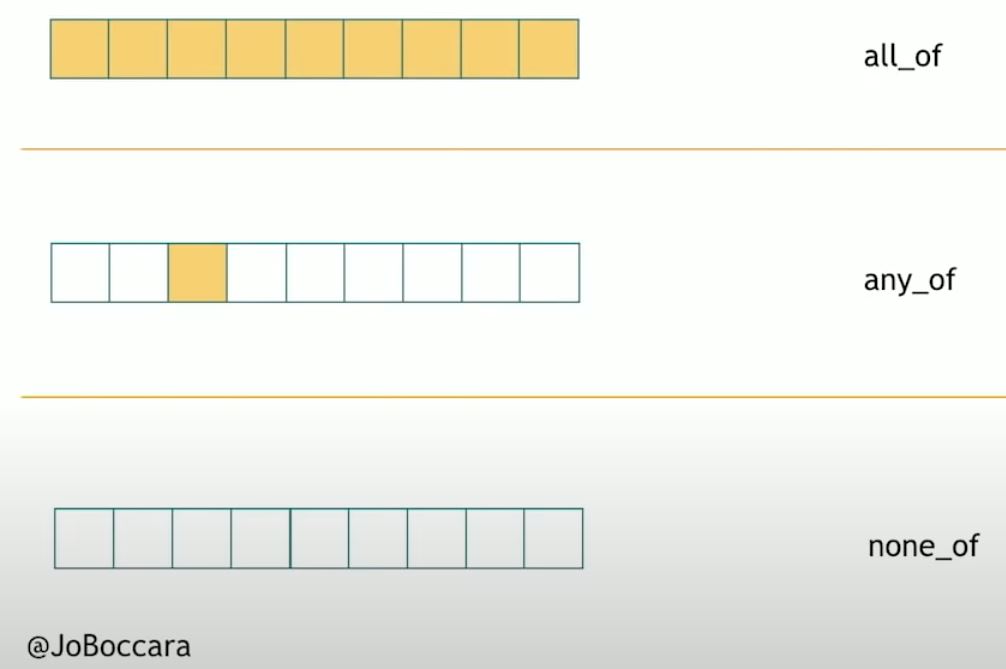
std::all_of: returns true for empty collection
std::any_of: returns false for empty collection
std::none_of: returns true for empty collection
:mountain: Querying a property on 2 ranges
Essentially different ways to compare 2 ranges
Pic
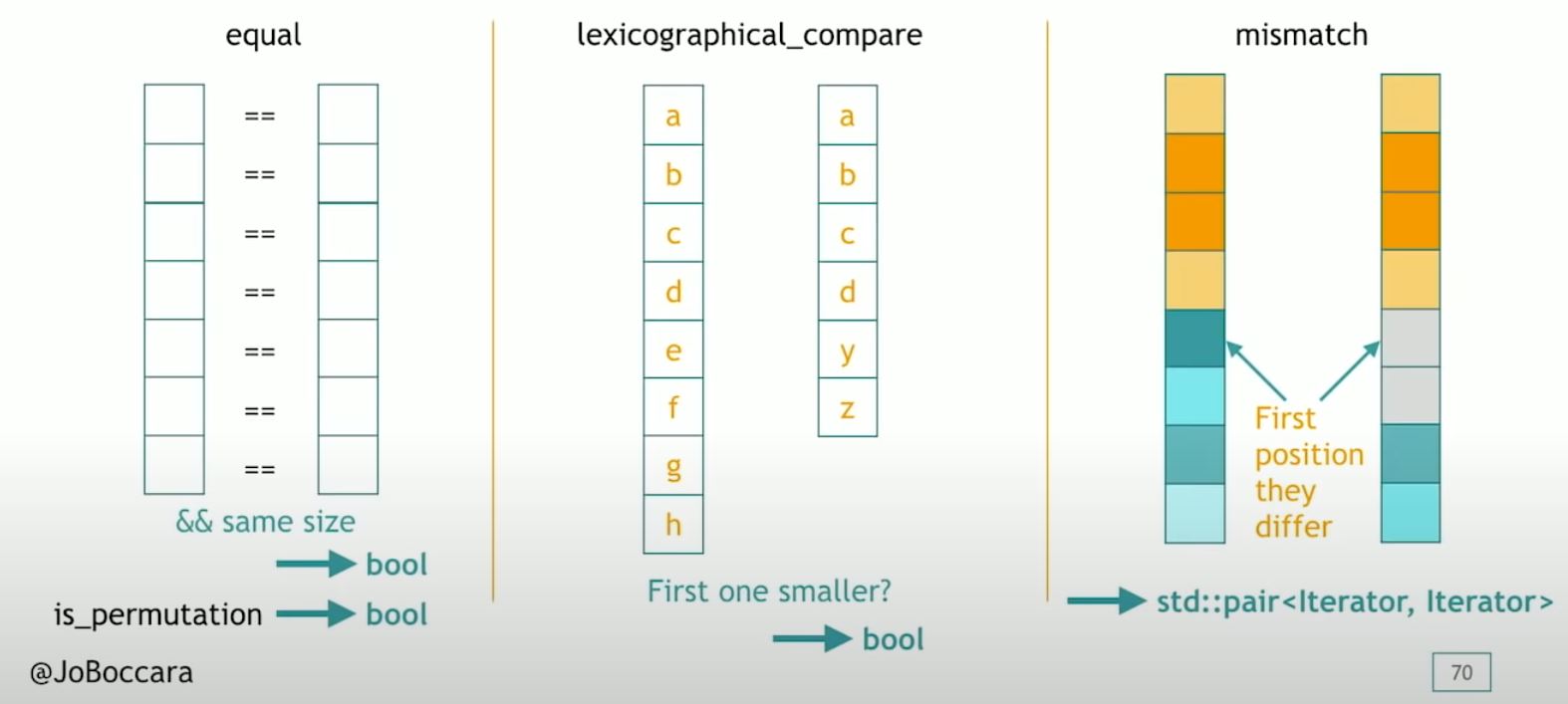
std::equal: return bool
std::lexicographical_compare: return true if first one is smaller
std::mismatch: return std::pair<Iterator, Iterator> for the mismatched point on each range.
:mountain: Search a value
Pic
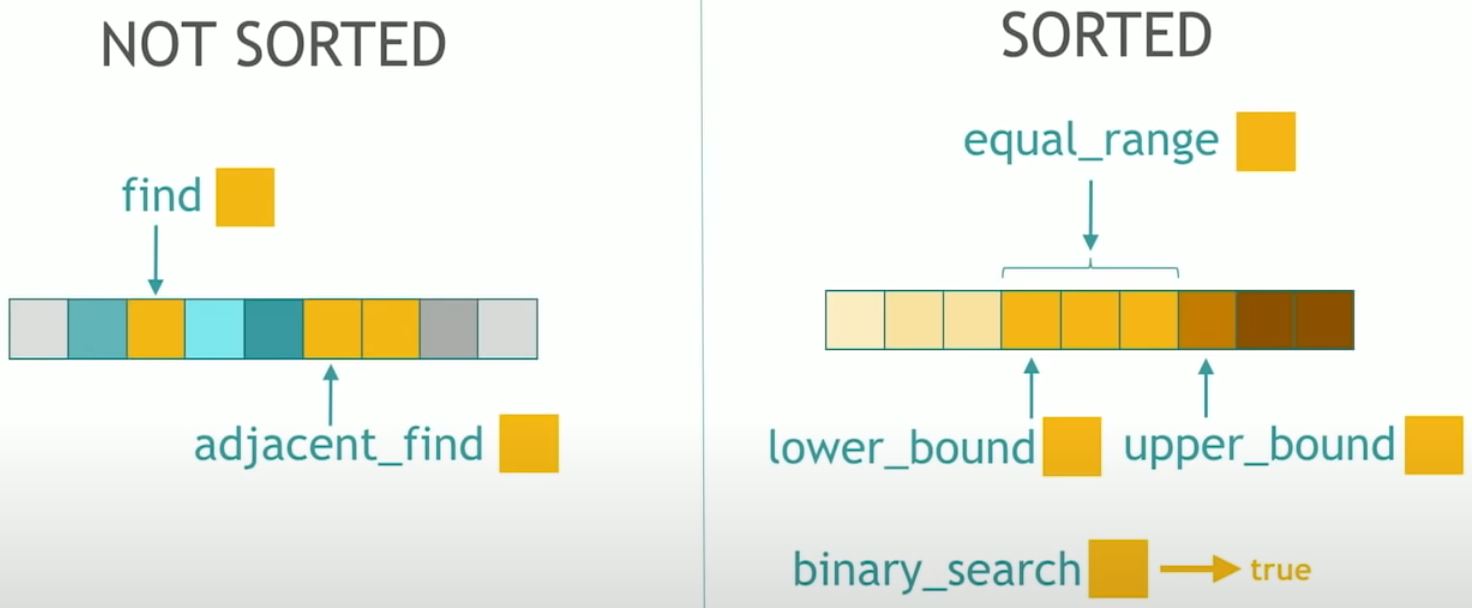
Not-sorted input:
std::findstd::adjacent_find: returns the first iterator where 2 adjacent values equal to input
Sorted input:
std::equal_rangestd::lower_boundstd::upper_boundstd::binary_search
:mountain: Search a range
Pic
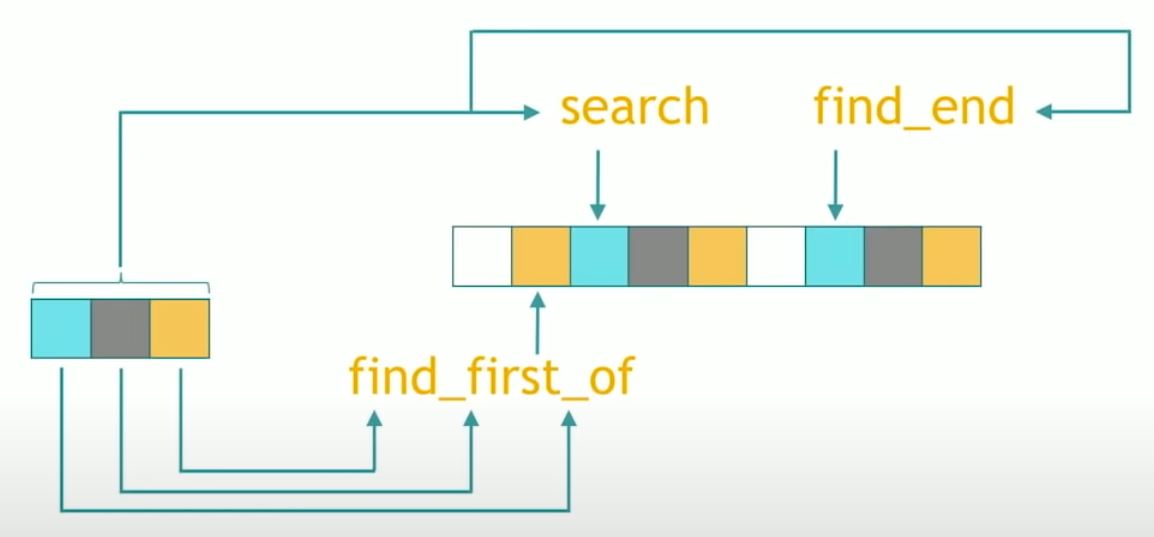
std::search (note, naming: "search" a range and "find" a value)
std::find_end (but then find_end for a range at the end...)
std::find_first_of (find first value in the small range in bigger range)
:mountain: Search a relative value
Pic
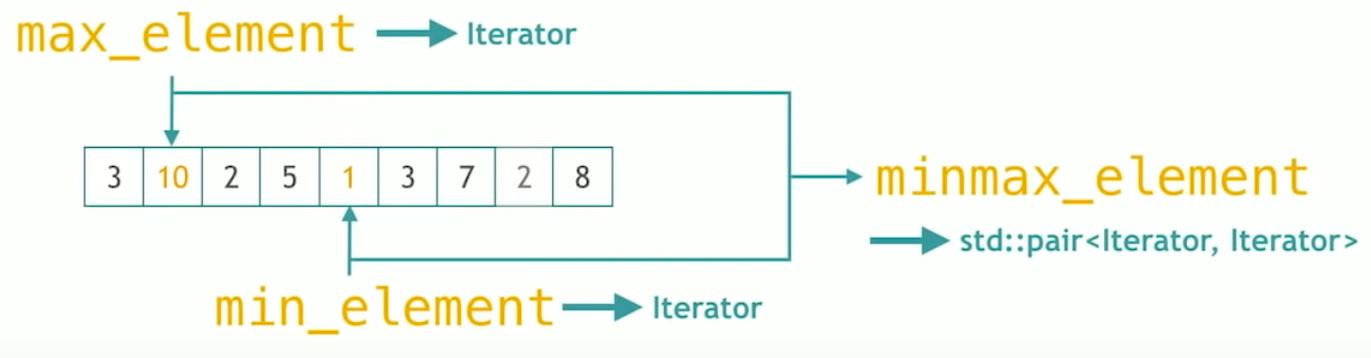
std::max_element
std::min_element
std::minmax_element
:world_map: Algos on sets
Note: "set" is any sorted collection. E.g. sorted vector is also a set for these algorithms
Pic
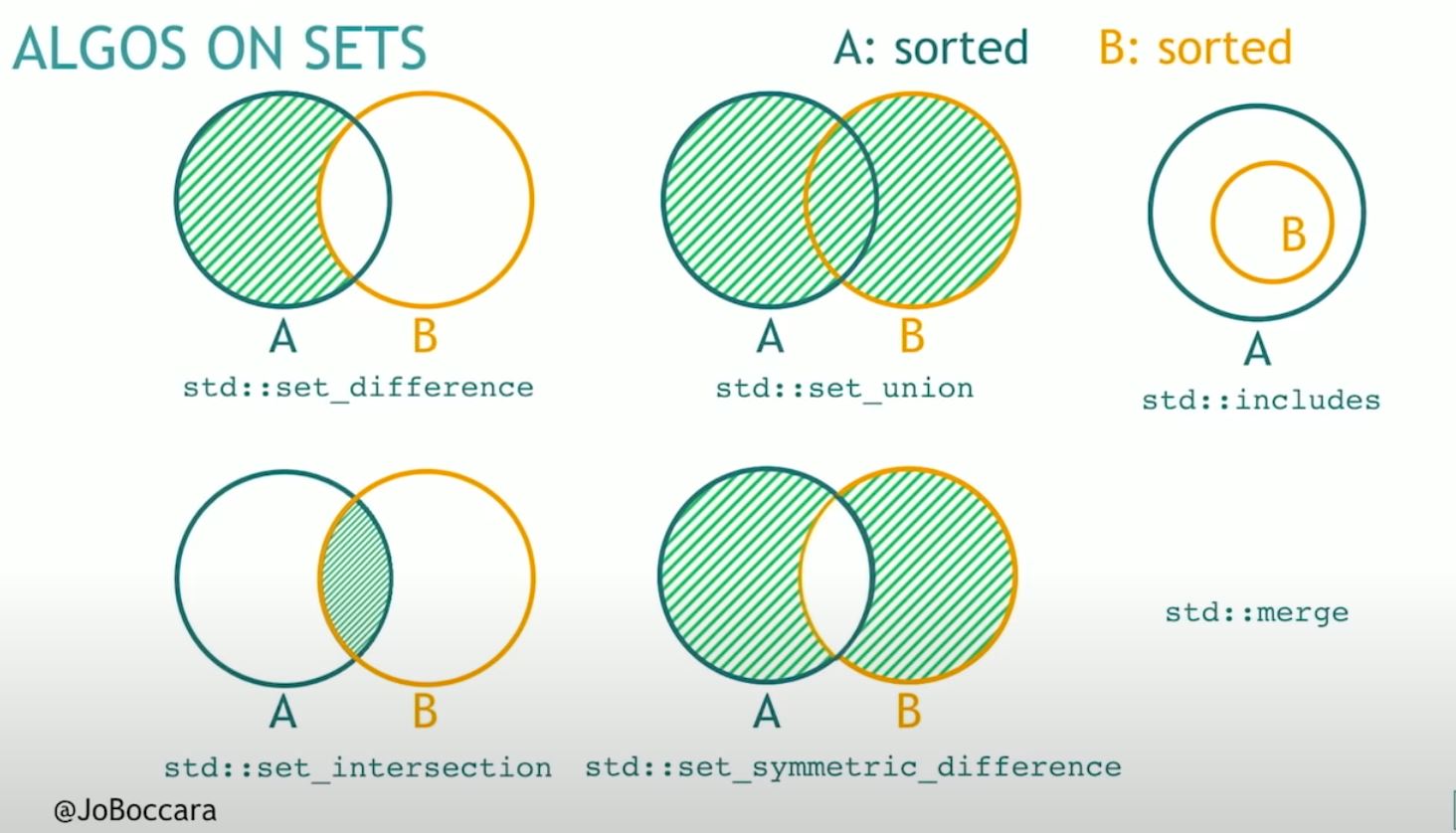
std::set_difference: elements in A but not B
std::set_intersection: elements in A and B
std::set_union: elements in A or B
std::set_symmetric_difference: A or B - (A and B)
std::includes
std::merge: combines 2 sorted sets into one bit sorted set
:world_map: Territory of movers
Pic
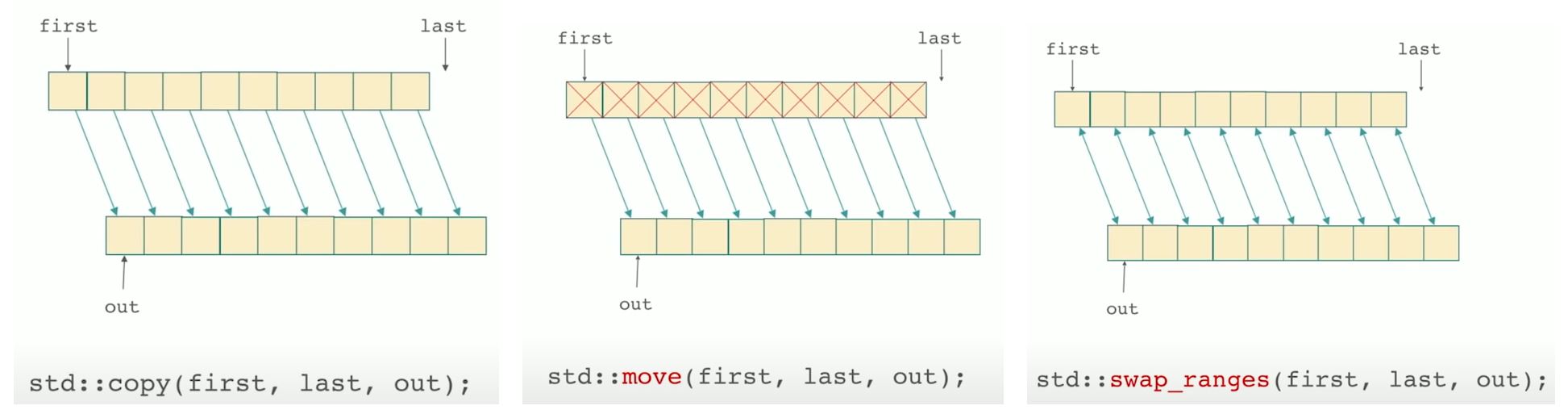
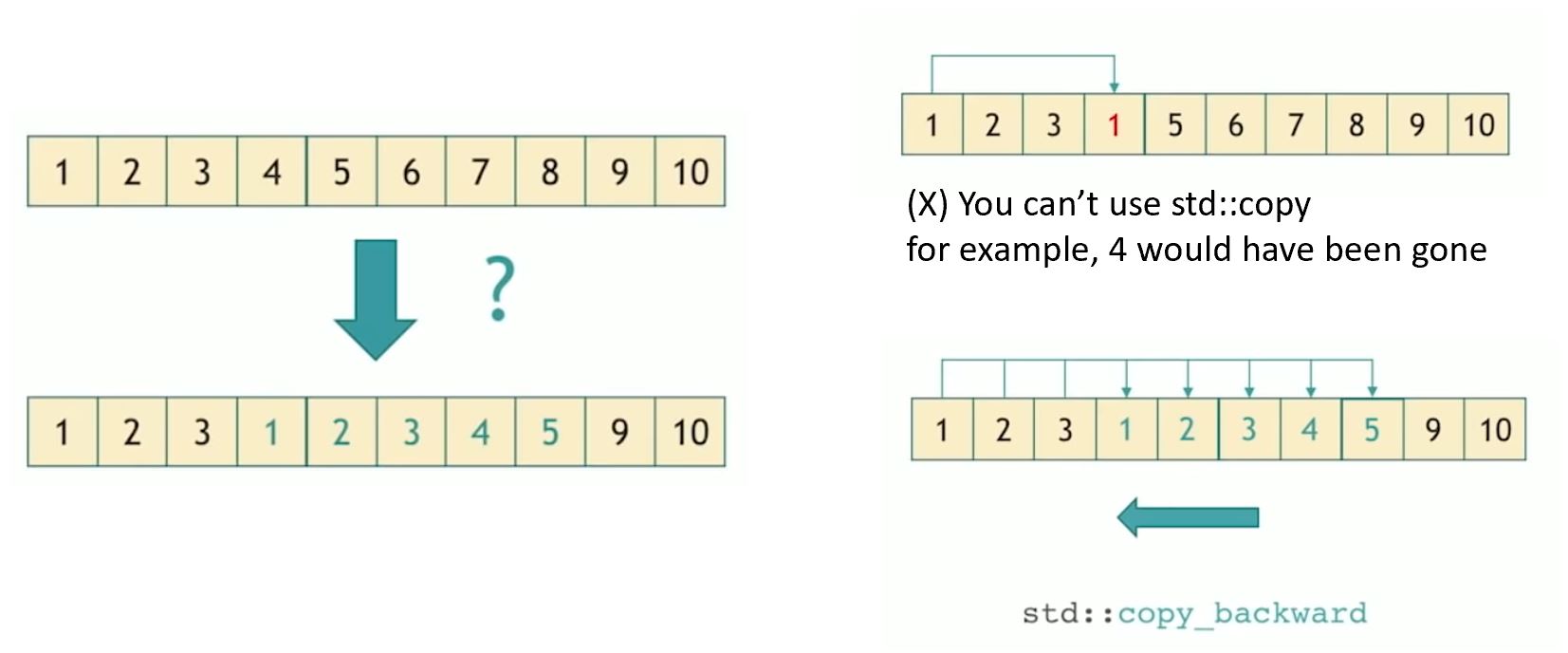
std::copy
std::move
std::swap_ranges
std::copy_backward
std::move_backward
:world_map: Land of value modifiers
Pic
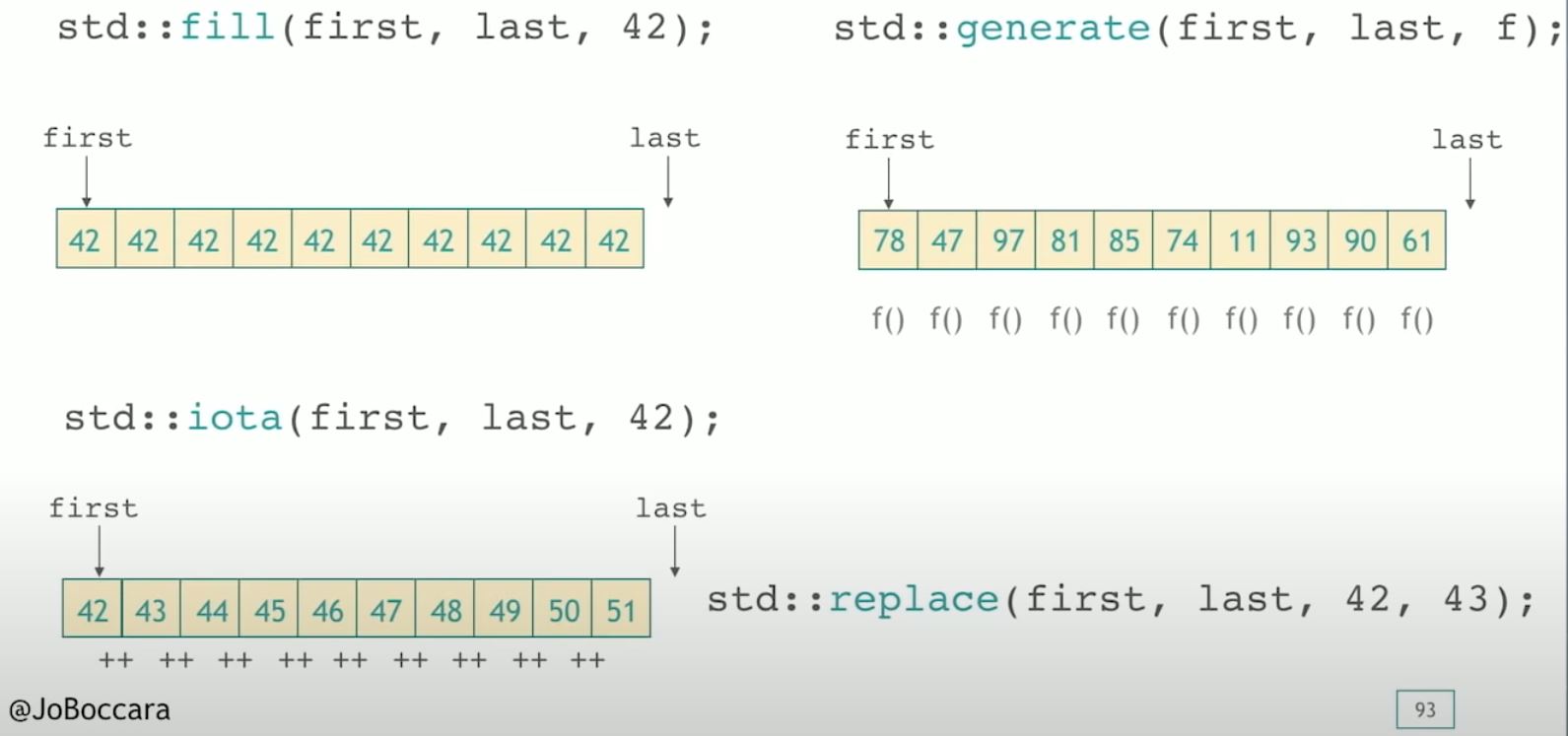
:world_map: Island of structure changers
Pic
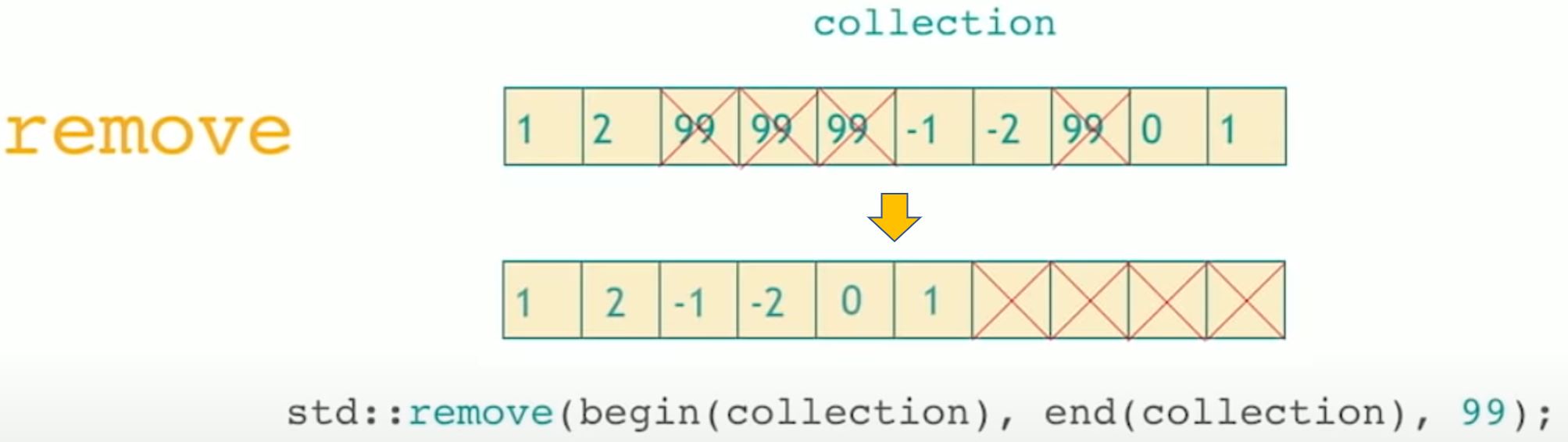
std::remove:
- note, it can't change the range, but putting or the removed one to the back of the range. (And the back could be anything, not necessarily the value you removed.)
- To "remove" like you expect, you need to do below --> e.g. erase the back of collection where
std::removehas "marked" it as removed.
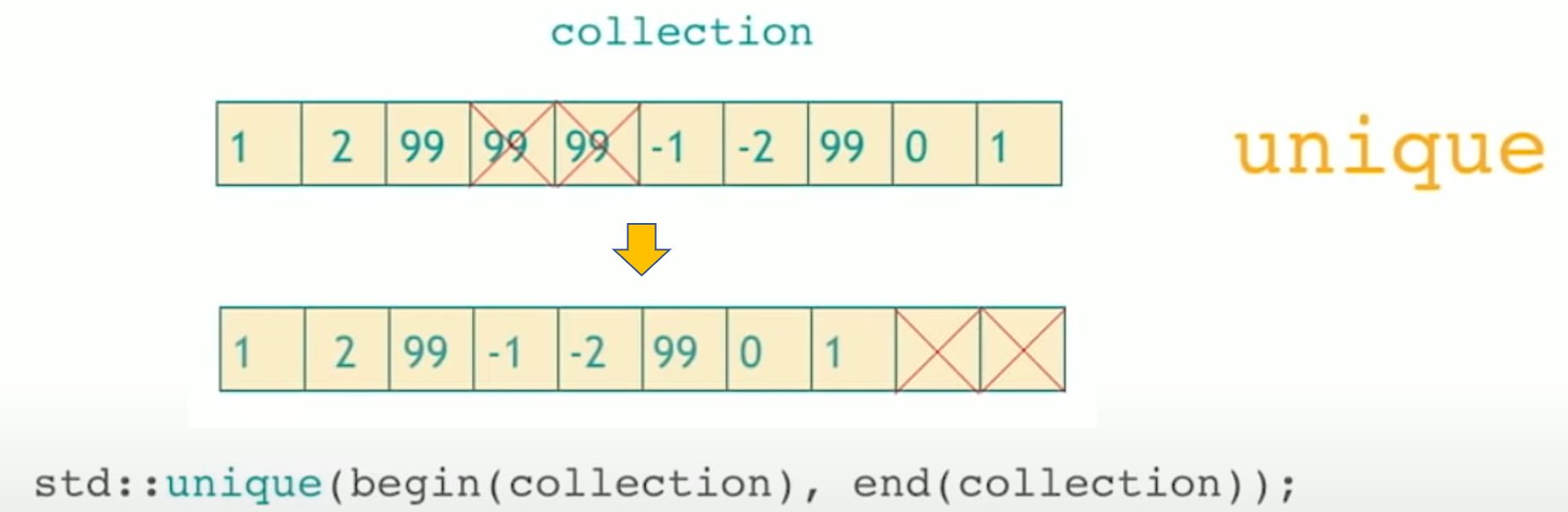
collection.erase(std::remove(begin(collection), end(collection), val), end(collection));std::unique
- note, similar to
std::remove, but put adjacent duplicated value to the end. Also need to use the samecollection.erase(std::unique(...), end(collection));like above to actually removed those adjacent duplicated values.
:sparkles: Secret runes for lands of algos
*_copy
- like the prefix, but put those elements into the output iterator you specified and leave the original collection intact
remove_copyunique_copyreverse_copyrotate_copypartition_copypartial_sort_copy
*_if
- Do something as long as predicate return true
find_iffind_if_notcount_ifremove_ifremove_copy_ifreplace_ifreplace_copy_ifcopy_if
:world_map: Peninsula of Raw Memory
uninitialized_*
- The ones without this prefix all use
operator=, and the ones with are using the ctor:std::fill(copy assignment) v.s.std::uninitialized_fill(ctor)std::copy(copy assignment) v.s.std::uninitialized_copy(copy ctr)std::move(move assignment) v.s.std::uninitialized_move(move ctr)
std::uninitialized_fill
std::uninitialized_copy
std::uninitialized_move
std::destroy
std::uninitialized_default_construct
std::uninitialized_value_construct
:sparkles: Final rune - *_n
*_n: not using the end range iterator but the size n that would have been used by the prefix algorithm.
copy_nfill_ngenerate_nsearch_nfor_each_nuninitialized_copy_nuninitialized_fill_nuninitialized_move_nuninitialized_default_construct_nuninitialized_value_construct_ndestroy_n
More algorithms
- Boost.Algorithms
boost::gatherboost::sort_subrangeboost::is_palindromeboost::boyer_mooreboost::one_of- ...